Rules
How Florida and California school cellphone bans work, and how to prepare your teen
Social media safety for parents and teens starts at school: Florida's HB 379 and HB 1105, California's AB 272 and AB 3216, district policies and a phone-free routine.
What to take away
- Social media safety for parents and teens in Florida and California now runs through state phone laws, district policies and classroom lessons about social media.
- Florida's HB 379 (2023) bars student phone use during instructional time and blocks social media on school internet access. HB 1105 (2025) extended the rule to the whole school day for grades K-8.
- California's AB 3216 (2024) requires every school district, county office of education and charter school to adopt a policy limiting or prohibiting student smartphone use by July 1, 2026. It built on AB 272 (2019), which only allowed such policies.
- Your district's own policy decides storage, exemptions and discipline.
- A phone-free school day works better when you practice the routine at home, name an emergency contact route and get the school's rules in writing.
What Florida's school cellphone laws require
Florida's first statewide rule came from House Bill 379 (2023), titled Technology in K-12 Public Schools. It became Chapter 2023-36, Laws of Florida, and took effect July 1, 2023. It bars students from using a wireless communications device during instructional time unless a teacher directs it for educational purposes.
The same law told districts to prevent students from reaching social media platforms on school-provided internet access, again unless a teacher directs it solely for education. It also bans TikTok on that access. You can read the bill on the Florida Senate's page for HB 379.
The rule now sits in section 1006.07(2)(f) of the Florida Statutes. Since July 1, 2025, House Bill 1105 has gone further: elementary and middle school students may not use a wireless device at any point in the school day. High school students are barred during instructional time, with the same teacher exception.
The current text of section 1006.07 is the one to quote to a principal. Cite the section, not a news summary. HB 1105 also set up a pilot in a handful of districts to test a full-day high school ban, so ask whether yours is one of them.
What Florida districts still decide
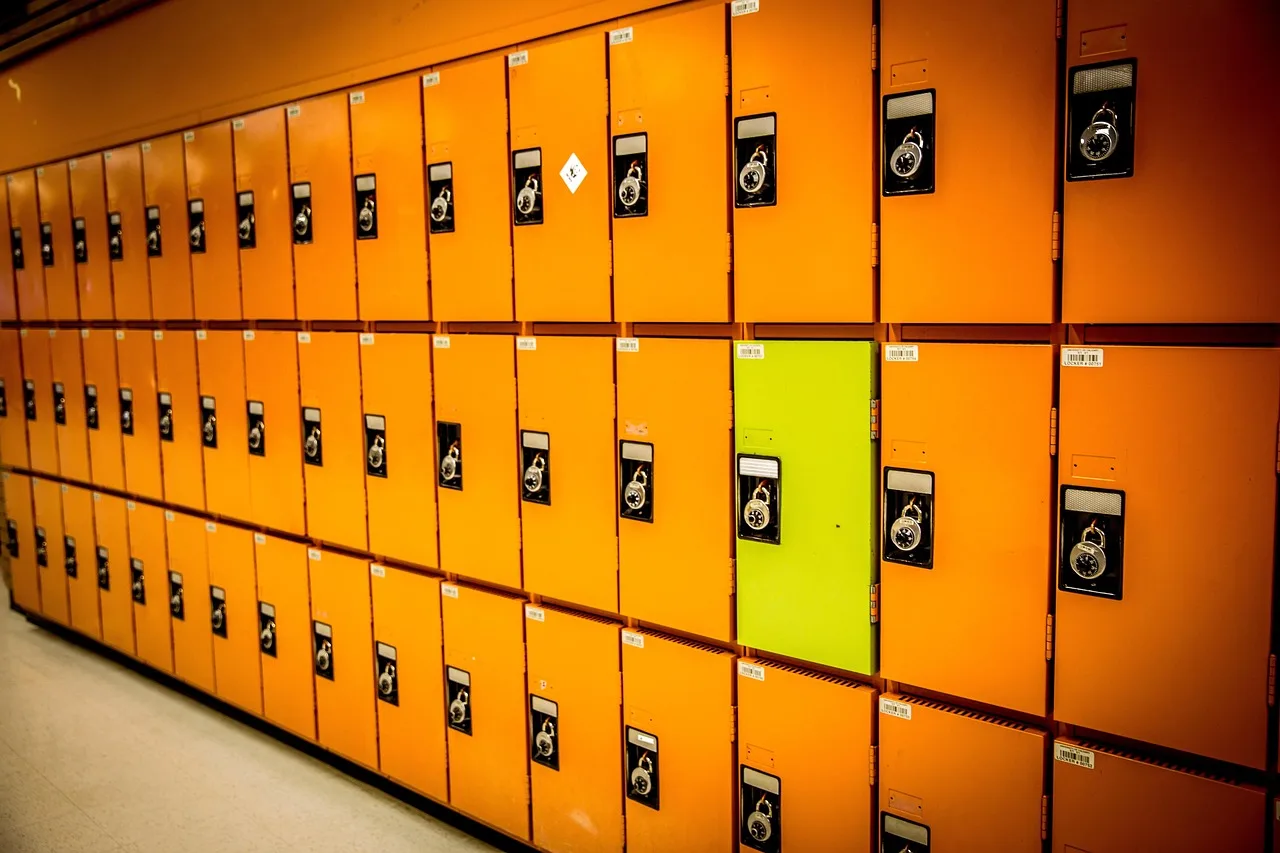
Each district school board adopts rules for devices, so details differ. Districts choose where phones are stored, what happens at lunch and passing periods in high school, and which consequences follow a violation. Some use phone caddies or locked pouches. Others rely on classroom rules and staff supervision.
Florida law allows exceptions. A student may use a device during the school day under an individualized education plan, a Section 504 accommodation plan, or a note from a licensed physician. Ask the school in writing how it handles each one.
Florida also requires lessons on social media. Under HB 379, public schools teach students in grades 6 to 12 about the social, emotional and physical effects of social media. That instruction is separate from the ban, but it connects school rules to social media safety at home.
What California's school phone laws require
California took a slower route. Assembly Bill 272 (2019) added Education Code section 48901.7, effective January 1, 2020. It let a district, county office or charter school adopt a policy limiting or prohibiting smartphone use at school. It did not oblige anyone to adopt one, so two neighboring districts could look nothing alike.
Assembly Bill 3216 (2024) changed "may" to "must." Each school district governing body, county office of education and charter school had to develop and adopt a policy limiting or prohibiting student smartphone use at school by July 1, 2026, and update it every five years. The text of AB 3216 is on the state legislature's site.
The law lets each district choose its method and does not require phone pouches or lockers. It does require exceptions. A policy cannot restrict a smartphone in an emergency or a perceived threat of danger. It cannot restrict one when a teacher or administrator gives permission, or when a licensed physician says use is necessary for the student's health or well-being.
California's classroom lessons have no single phone-style law. Education Code section 33548, added by AB 873 (2023), defines media literacy and digital citizenship for the state's curriculum frameworks. It asks the commission to consider media literacy content when frameworks are revised. Ask your district what it teaches rather than assuming a statewide course.
If your teen's California school says it has a phone policy, ask for the board-adopted document. A handout at orientation is not board policy, and the board version carries the enforcement language.
Where Florida and California differ
The clearest difference is how firm the state baseline is. Florida sets the same minimum everywhere: no phone use in instructional time for every student, and no use at all during the school day for grades K-8. California sets the duty to have a policy, then leaves the content to each district.
Florida vs California School Phone Rules
Florida
- State baseline
- Statewide floor
- Instructional time
- Banned by law
- Network rules
- Named in law
- Required lessons
- Social media safety
- Enforcement
- Code of conduct
California
- State baseline
- District option
- Instructional time
- District decides
- Network rules
- Vary by district
- Required lessons
- Digital citizenship
- Enforcement
- Responsible-use policy
Florida's law also names social media on school internet access, which gives districts a network-level rule to enforce. California's network rules vary by district.
Both states point schools toward teaching about social media. Florida's lessons are written into HB 379 for grades 6 to 12. California's approach runs through curriculum frameworks. Either way, your teen should be getting structured lessons, not just a ban.
Parents comparing districts should read the policy rather than the headline. For a wider view of how school phone bans are written elsewhere, a comparison of cellphone bans in Canadian schools shows how much variation exists even under one national conversation.
Florida
- State law
- HB 379 (2023) and HB 1105 (2025), section 1006.07(2)(f)
- What it requires
- No device use in instructional time; none all day in grades K-8; social media blocked on school internet
- In force since
- July 1, 2023 (HB 379); July 1, 2025 (HB 1105)
- Statewide ban
- Yes for grades K-8 all day; high school in instructional time
- Instruction
- Social media effects, grades 6-12
- Where rules live
- District rules and code of conduct
- Parent action
- Ask for the device section in writing
California
- State law
- AB 272 (2019) and AB 3216 (2024), Education Code section 48901.7
- What it requires
- Every district, county office and charter school must adopt a policy limiting or prohibiting smartphones
- In force since
- January 1, 2020 (AB 272); policy due July 1, 2026 (AB 3216)
- Statewide ban
- No single ban, each district writes the policy
- Instruction
- Media literacy in curriculum frameworks, set by districts
- Where rules live
- Board policy, varies by district
- Parent action
- Ask for the board-adopted policy
What districts write into their own policies
Both states push the daily details down to districts. That is why the district policy matters more than the statute for your teen's week.
A usable district policy answers five questions. When are phones off? Where are they stored? Who may grant an exception? What happens on a second or third violation? How does the school contact you during the day?
Los Angeles Unified shows how specific a California district policy can be. Its board voted in June 2024 to direct staff to draft a ban on phones and social media for the school day, and the policy took effect in February 2025. Students switch devices off and store them, with exceptions for health needs, translation and IEP or 504 plans.
Ask for any policy in writing, including the discipline ladder. A verbal "phones are not allowed" is not enforceable in a way you can plan around. Use a school guidance checklist to compare what your district publishes against what it does.
Watch the storage detail. A policy that says phones must be silenced but kept in backpacks is a different rule from one that requires a caddy at the door. The second removes the temptation during class.
Also check the exemption process. Medical devices, translation apps for multilingual students and documented accommodations all need a clear route. If the process is unclear, ask the front office and keep the reply.
Questions worth emailing to the school
Questions worth emailing
- Which board policy or code section covers student phones this year?
- Where are phones stored during instructional time?
- How does a student request a medical or accommodation exemption?
- What are the consequences for a first, second and third violation?
- If I need to reach my teen urgently, what is the school's process?
Parents who want a change can organize. Our piece on how to push for school phone limits covers parent groups and board meetings.
Preparing a teen for a phone-free school day
A phone-free school day fails at home before it fails at school. Teens who expect a mid-class text thread will fight the rule. Teens who know the plan usually do not.
Start with the night-before routine. Phone charges outside the bedroom, alarm on a separate clock, bag packed before bed. This one change removes most morning phone friction and makes your wider teen social media use guide rules easier to keep on school days.
Phone-Free School Day Prep
- Read district policy with your teen
- Set night-before charging routine
- Agree on one emergency route
- Practice the handover at home
- Review the first week together
The handover is the hard moment. If your district uses pouches or caddies, practice it at the kitchen table. A teen who has done the motion once will not fumble it at the classroom door.
Talk about what replaces the phone. A book, a notebook, a deck of cards, a friend to sit with at lunch. Boredom is the real complaint behind most phone pushback.
Explain the why in plain terms. Social media apps are built to hold attention, and class time is short. Teens respond better to that than to a lecture about discipline.
If your teen uses a phone for a medical app, an IEP accommodation or translation, get the exemption in writing before the first day. Do not rely on a teacher's verbal okay.
What to say when your teen pushes back
Acknowledge the loss. Losing lunchtime scrolling is a real loss to a teenager. Then restate the rule and the reason, once, without a debate.
Offer a trade. If the phone stays in the pouch all day, home rules can be a little looser in the evening. That keeps the school rule from feeling like a total loss of control.
Handling the after-school handover and emergency contact problem
The 3 p.m. handover is where phone-free policies create the most parent anxiety. Your teen gets the phone back and the group chat has moved on without them.
Set a predictable reconnect window. Many families let teens have 20 to 30 minutes after school to catch up on messages before homework starts. A predictable window reduces the urgency to check the phone during class.
The emergency contact problem is separate and worth solving early. Schools do not want parents calling a teen's phone during a lockdown or a drill. Ask the office for the official route and use it.
Make sure your teen knows the office number and where to go if they need to reach you. A student who knows the route does not need a hidden phone.
Update your own contact list. If the school uses a mass notification system, confirm your number and email are current. That system, not your teen's phone, is the emergency channel.
If your teen has an after-school job, a sport or a long bus ride, build the pickup plan into the routine. Uncertainty is what drives the "I need my phone" argument.
A social media safety for parents and teens plan for the first term
Treat the first term as a test run. The goal is a routine that survives October, not a perfect first week.
Set a weekly check-in of ten minutes. Ask what is working, what is awkward and what your teen wishes were different. Keep the school rule fixed and the home details flexible.
Audit the apps on your teen's phone once this term. Check privacy settings, who can message them and whether location sharing is on. Our guide to age checks and social media rules by state explains what apps may already ask of your teen.
Agree on a reporting habit. If something happens online, your teen should know how to save evidence and tell an adult. Schools have a reporting route, and platforms have their own. Our guide to reporting cyberbullying and sextortion sets out which agency handles which harm.
The Federal Trade Commission enforces COPPA, which limits data collection from children under 13, and the National Center for Missing & Exploited Children runs the CyberTipline for reports of online exploitation.
Know the school's lessons on social media. In Florida, districts teach the effects of social media in grades 6 to 12. In California, ask what your district's curriculum covers. Reinforce it at home.
Keep the phone out of the bedroom at night for the whole term, not just the first week. Sleep is the strongest lever parents have, and it makes the school day easier.
- Storage rule and consequences understood by your teen
- Emergency contact route confirmed with the office
- Night-before charging routine in place
- After-school reconnect window agreed
- App privacy settings reviewed this term
- School social media lessons discussed at home